
Dolphin Experience Blog
Dolphin Facts for Kids: Questions to Explore Before Your Cabo Visit
Explore how dolphins breathe, find food with sound, and grow up. Read these facts together and choose a few questions for your family’s Cabo visit.
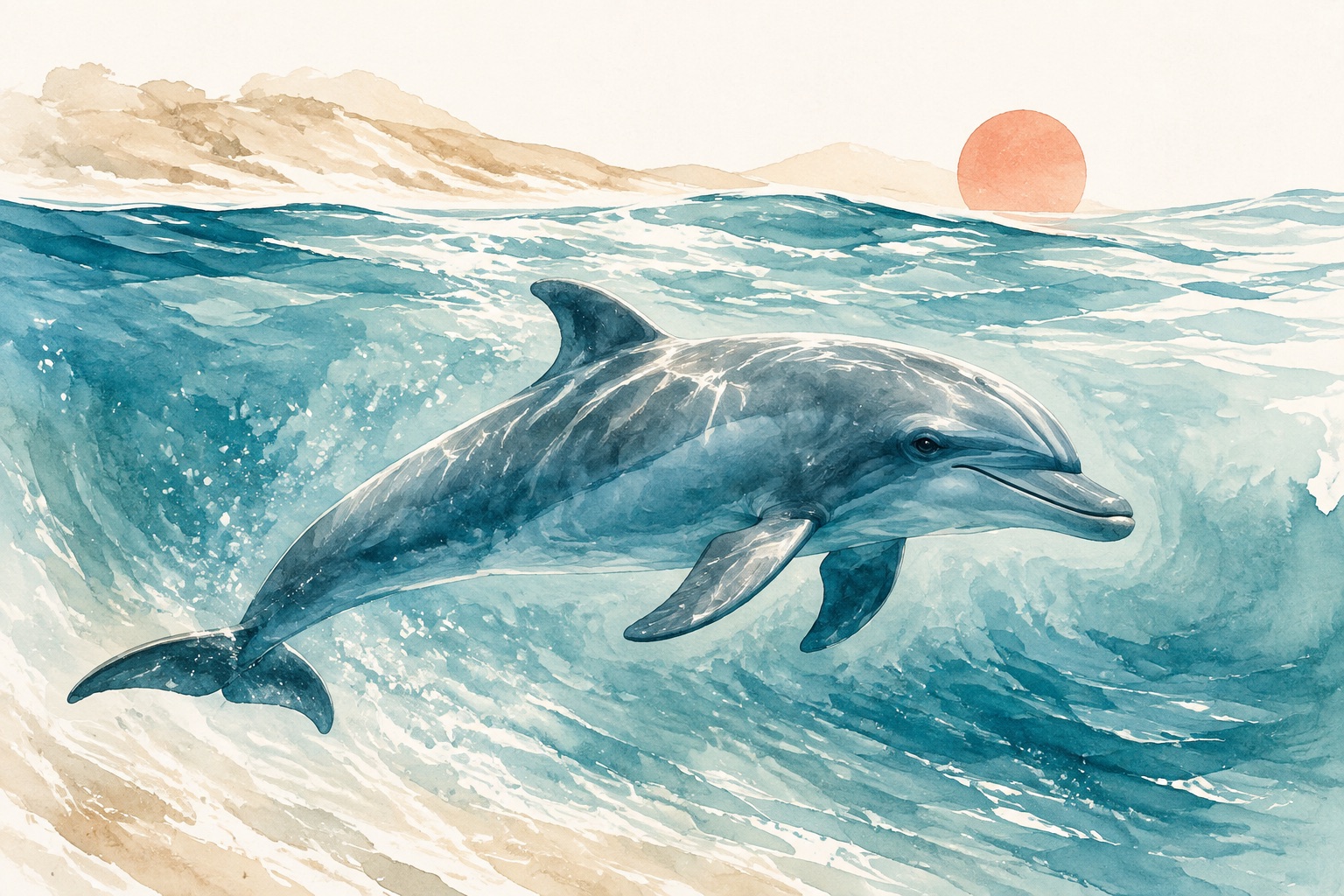
Dolphins are mammals, not fish
A dolphin lives in water, but it breathes air with lungs. The blowhole on top of its head is the opening it uses to breathe at the surface. Dolphins also give birth to live young and feed their babies milk. These are useful clues to why dolphins belong to the mammal group.
Before your Cabo trip, try reading one section of this guide together each day. Let your child choose a fact that surprises them and turn it into a question. The facts below draw on NOAA’s educational resources; the feeding and calf-development examples focus on the common bottlenose dolphin.
Ask together: “If a dolphin has lungs like we do, where does it need to go to take a breath?” On paper, draw a dolphin at the surface and add an arrow pointing to its blowhole.
How bottlenose dolphins find food using sound
Common bottlenose dolphins can locate prey by listening and by using echolocation. Echolocation means producing sounds and using the echoes that return from objects. Sound becomes a way to gather information about the surroundings.
Try a drawing: put a dolphin on one side of a page and a fish on the other. Draw one arrow for the outgoing sound and another for the returning echo. This is a simple explanation to discuss at home, not a diagram of everything happening inside the animal.
Ask together: “What is the difference between hearing a sound around you and making a sound to listen for its echo?” Save a follow-up question about echolocation for a specialist; you do not need to hear it happen to learn about it.
Teeth that grip food rather than chew it
NOAA describes common bottlenose dolphins using their teeth to hold fish, then swallowing the fish whole instead of chewing it. Having teeth does not mean every animal uses them in the same way.
Ask together: “What is different about the way a dolphin uses its teeth?” Make two headings on your page: “holding” and “chewing.” Explain the difference in your own words. Keep this as a conversation or drawing activity, rather than trying to copy how a dolphin eats.
Social groups and dolphin communication
Dolphins tend to be social. Their sounds include whistles, clicks, buzzes, and squeaks, used in complex communication and echolocation. Common bottlenose dolphins may travel alone or in groups, and those groups can separate and come together again.
Ask together: “How could scientists learn what a dolphin sound means?” This is a chance to practice describing evidence. A sound or movement alone does not tell us an animal’s feelings. If you notice something during your visit, describe what happened and ask the specialist about it.
What calves learn while growing up
A baby dolphin is called a calf. According to NOAA, common bottlenose dolphin calves nurse for about 20 months and generally remain with their mothers for three to six years. These are typical figures for this species, not a timetable that every dolphin follows.
That gives your family a starting point for a question rather than a made-up story about a dolphin’s childhood: “What skills does a calf learn as it grows, and how do researchers study that?” You could also ask why young dolphins stay close to their mothers. We should not assume that growing up is identical across dolphin species.
Questions for your Cabo visit
Choose two or three questions your child actually wants to ask. A younger child might pick breathing or teeth; an older child might want to explore echoes or how scientists study behavior. There is no quiz to pass before your visit.
Dolphin Experience is an independent booking brand; Cabo Adventures operates the activity. These biology facts are background reading, not a promise that you will see calves, hear particular sounds, feed dolphins, or watch an echolocation demonstration. During the session, follow the specialist’s instructions and ask questions when invited.
Afterward, make a small family journal with three prompts: “Something I noticed,” “Something I learned,” and “Something I still wonder.” A drawing or a sentence is enough. Keep what you observed separate from what someone explained, and use the NOAA links in this guide to continue exploring at home.